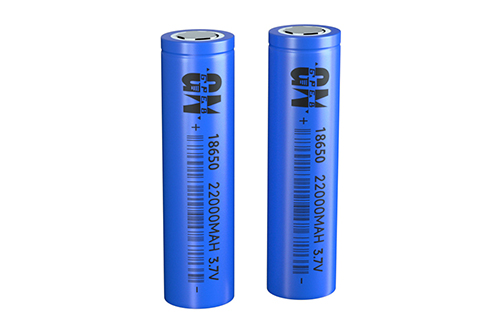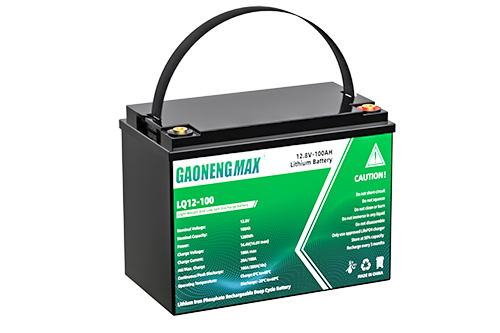
Lithium Battery 3.7V Lithium Polymer Battery 3.2V LifePo4 Battery 1.2V Ni-MH Battery Button Coin Battery

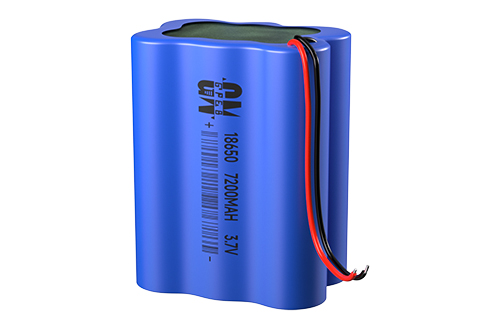
3.7V Battery Pack 7.4V Battery Pack 11.1V Battery Pack 14.8V Battery Pack Other Battery Pack
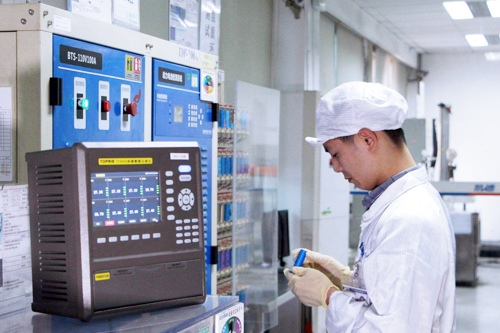
Sino Science&Technology Battery Co.,ltd is a high-tech production enterprise which specialize in the R&D and production of Lifepo4 batteries,energy storage battery,portable UPS power supply,personalized customization lithium battery pack etc .


Environmental cylindrical 18650 21700 32700 26650 14500 18500 lithium ion rechargeable battery, LifePO4 battery,3.7V lithium polymer battery, NiMH battery , NiCD battery ,Lead acid battery,dry cell battery ,alkaline battery ,heavy duty battery, button cell battery etc. we devote to R&D,innovation ,production & sales

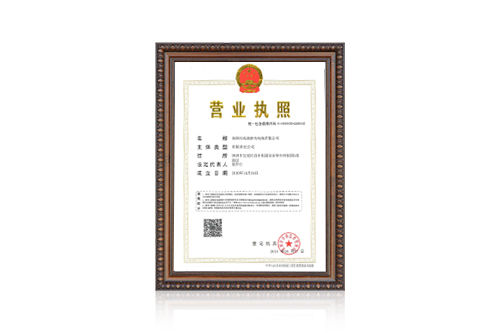
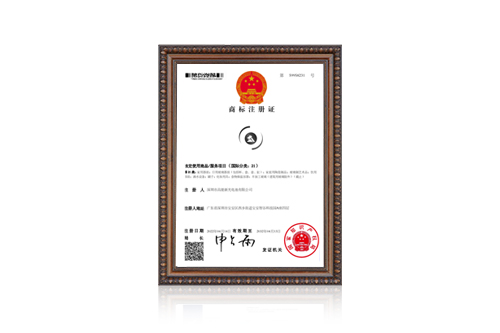
Shenzhen Green Power Energy Battery Co.,ltd specializes in a wide range of digital battery such as environmental cylindrical 18650 21700 32700 26650 14500 18500 lithium ion rechargeable battery, LifePO4 battery, 3.7V lithium polymer battery, NiMH battery, NiCD battery, dry cell battery, alkaline battery, heavy duty battery, button cell battery etc. we devote to R&D, innovation, production & sales. With automatic production machines we have been exported goods to all over the world over 15years. We have complete exported certificate such as KC, CE, UL, BSCI, ROHS, BIS, SGS, PSE etc

Dongguan Datapower New Energy Co.,ltd is a high-tech production enterprise which specialize in the R&D and production&sale of lithium polymer batteries,drone battery,airplane batteries &battery pack etc.

Anhui Seong-hee New Energy Technology Co.,ltd is a high-tech production enterprise which specialize in the R&D and production of primary batteries. And mainly produces and sells alkaline batteries & carbon zinc batteries. there are size AA, AAA, C, D, 9V etc

Guizhou STD Battery Co.,ltd is a high-tech production enterprise which specialize in the R&D and production & sale of lithium polymer batteries, drone battery, airplane batteries & battery pack etc.

release time:2024-03-26 Hits: Popular:AG11 battery
Ni-MH battery packs capacity measurement circuit
I have some old lithium batteries on hand. Some have eliminated the ones used on mobile phones. Also removed from a laptop battery pack. It has been used for some time and the capacity has decreased. I don't know how much capacity is left, so I plan to make a simple circuit to measure it. After repeated trials. A measurement circuit that meets the requirements is designed. It does not require an additional power supply. The circuit is powered by the Ni-MH battery packs itself under test. It is more convenient to use. Because we only need to know the approximate capacity and do not need to draw the discharge curve, we use a small quartz watch to keep time. Cheap and easy to get. The outer casing is modified from a discarded mobile phone battery universal charger, and the original parts inside are used as much as possible. Relatively easy to make.
Suitable for lithium batteries with discharge protection boards. A constant current circuit composed of Q1, Q2, R1, and R2 discharges the battery, and a voltage of 1.5V is obtained at both ends of D1 and D2. Power a small quartz watch to keep time. The disadvantage of this circuit is that the accuracy is not high. The actual current in the later stage of discharge is far less than 100mA, and the small quartz watch is still timing. The measured capacity is too large.
After the battery is discharged to the set voltage, the discharge current is cut off, which is more suitable for batteries without a discharge protection plate. At the same time, small current discharge is prevented to obtain accurate capacity value. When SW2 is open. Two 3.3Ω resistors are connected in series. The discharge current is about 100mA, multiplied by the travel time of the quartz watch to get the battery capacity (mAh). When switch Sw2 is closed, the discharge current doubles, that is, 200mA, which can save half of the test time and is used for larger-capacity battery measurements. If you are only measuring small-capacity lithium batteries, SW2 does not need to be installed.
Whether the constant current circuit works or not is determined by the voltage division of Ic1 and R7 and R8. The cut-off working voltage of this circuit is designed to be 3.3v. Of course, it can also be changed to other voltages (such as cut-off at 3V). Just adjust R7 and R8. The cut-off voltage is set at 3.3V because it was found in the test that when the Ni-MH battery packs voltage drops to 3.3V, the discharge current has dropped to less than 100mA. In fact, there is not much remaining power, and the cut-off voltage is too low, which is detrimental to the battery. R6 provides a positive feedback, which can speed up the reversal of the circuit and generate a hysteresis of about 0.3V. When the battery voltage drops to 3.3V, it will immediately rise to about 3.5v after the circuit is turned off. This resistor can prevent the circuit from frequently operating.
LED3 and IC2 form a discharge indication circuit. During the discharge process, LED3 flashes at a frequency of 2Hz. IC2 has two packaging forms: TO92 and soft packaging. Its pin arrangement is shown in Figure 2. LED1 is the battery reverse connection indicator, and LED2 is the battery connection indicator. It will still light up after the discharge is completed, reminding you to remove the battery as soon as possible.
Q1 uses the 8550 in the original charger, or a pNp transistor with Icm>300mA such as 9012. Q2 can use low-power pNp silicon tubes such as 9015 and A1015. It is better to have a larger amplification factor, generally greater than 150. D1 and D2 use common 1N4000 series rectifier diodes, and the forward voltage drop of the two is exactly 1.5V.
R1, R2, and R3 use 1/8w metal film resistors, and other resistors can be 1/8w or 1/16w. Ic1, IC2, LED and battery polarity switch Sw1 are from the original charger. Some universal chargers may not have a flashing integrated circuit. You can string a resistor of tens of ohms in series with LED3 to replace IC2. SW2 is a small horizontal toggle switch.
Read recommendations:
How to understand the safety issues of polymer batteries?48v lithium golf cart battery
Lithium battery terminology, parameters, design and selection details
Last article:R03 Carbon battery
Next article:AAA Ni-MH batteries
Popular recommendation
14250 battery direct sales
2023-03-22energy storage battery for solar system wholesale
2023-05-101.5V rechargeable battery
2023-03-22902030 polymer battery company
2023-03-22battery for solar energy storage Processing
2023-05-10Ni-MH AA1200mAh 1.2Va
2022-07-01LR14
2022-07-01Coin Battery LR 41
2022-10-15601248 300mAh 3.7V
2022-08-19802540 800MAH 3.7V
2023-06-10Coin Battery CR 2450
2022-09-27R6P
2022-12-01522749 880mAh 3.7V
2022-07-01R6P
2023-02-18L1022 10A
2022-10-09cr2032 3v lithium battery
2023-06-25602030 polymer battery
2023-06-25AAA Ni-MH batteries
2023-06-25CR927 battery
2023-06-25NiMH No. 7
2023-08-04Safety Issues of Lithium - Ion Batteries
2025-03-26Introduction to the Development History of Lithium Ion Polymer Batteries.18650 1800mah battery
2023-08-25Low Self-Discharge of Lithium-Ion Batteries
2025-01-08What is a low-temperature battery
2024-06-03Graphene battery technology principle.energy storage lifepo4 battery pack
2023-04-03Lithium Power Battery Science Research.CR2032 button cell battery
2023-07-12When should the lithium battery be charged in normal use
2023-02-10The working status of lithium-ion battery chargers.3.7 volt 18650 lithium battery
2023-08-10How many years are lithium batteries?energy storage lithium battery wholesaler
2023-04-06Technologies related to negative electrode free batteries.18650 lithium ion battery cell
2023-07-05
360° FACTORY VR TOUR