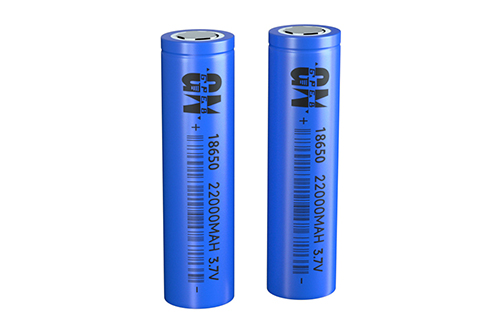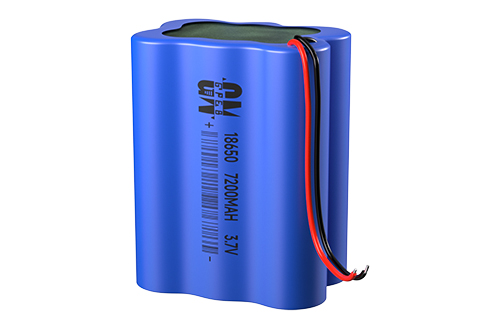
18650 rechargeable battery lithium 3.7v 3500mah
CH
About Us
Company Profile Development History Sales Network Partner Social Responsibility
Products
Rechargeable Battery Battery Packs Energy Storage Battery Primary Battery Handicraft Article
Subsidiary Company
SINO TECHNOLOGY SUNBEAM GREEN POWER DATAPOWER SEONG-HEE STD
Honor
Qualification Certificate Patent Certificate Honor Certificate
R&D
R&D Center Test Center
News
Company News Industry News Product Certificate
Contact Us
Other information
product
polymer lithium battery Primary battery Rechargeable Battery LR03 alkaline battery
18650 rechargeable battery lithium 3.7v 3500mah
polymer lithium battery

Primary battery

Rechargeable Battery

LR03 alkaline battery

batteries aaa

release time:2024-04-11 Hits:     Popular:AG11 battery

  Transformational thinking in organic photovoltaic cell research

  Organic photovoltaic cells have been touted as a lightweight, low-cost alternative to rigid silicon-based solar panels. In recent years, the conversion efficiency of organic photovoltaic cells has been greatly improved. However, how exactly organic photovoltaic cells convert sunlight into electricity is still a matter of intense debate.

  Now, a research team from Stanford University in the United States is involved in this topic. The research team disclosed in the journal Nature Materials on November 17, 2013 that the originally recognized working principle was incorrect and that thinking should be focused on material design to improve the performance of organic batteries.

  Michael McGehee, a professor at the School of Materials Science and Engineering at Stanford University (one of the authors of the paper) said: We all know that organic photovoltaic cells have outstanding performance. The question now is, why are they so outstanding? —The answer remains controversial.

  Traditional organic solar cells consist of two semiconductor layers made of plastic polymers and other flexible materials. By absorbing photons (particles of light), the battery produces electricity.

  When the battery draws in light, the photons bounce around the polymer atoms, causing them to spill electrons, leaving behind a hole—scientists call it a hole. The holes and electrons quickly form a combination of excitons (excited electrons). The exciton then splits off and moves independently into a hole created by another photon. The continuous movement of excitons from one hole to another generates an electric current.

  In this paper, the Stanford team solved a long-debated question—what causes excitons to split.

  Alberto Salleo, an associate professor in the Department of Materials Science and Engineering at Stanford University, claimed: To generate an electric current, it is necessary to separate excitons and holes - which requires two different types of semiconductor materials. If material B has a greater attraction for excitons than material A, then the excitons will swim toward material B. Theoretically, even if dropped into a material, the exciton would still be bound to the hole.

  However, the protracted debate centers on how this bound state can be split?

  Passionate

  One explanation widely accepted by scientists is the thermal exciton effect theory. The theory is that when an electron falls from material A into material B, it carries extra energy—this extra energy gives the excited electron enough speed to escape the hole.

  However, the Stanford team's experimental results do not support this hypothesis.

  Stanford scientists may have solved the long-running debate about how organic photovoltaic cells convert sunlight into electricity, says Stanford's Koen Vandewal. The core of the problem: What exactly causes the separation of electron-hole pairs (excitons)? Possible answer: The natural gradient at the interface between the disordered polymer and the ordered buckyball causes excitons to split, allowing electrons (purple) to escape, creating an electric current.


Read recommendations:

703048 1100mAh 3.7V

What are the causes of battery energy loss

High-Rate Discharge Technology for Lithium Batteries

551235 polymer battery

li ion 18650 battery pack company

Last article:CR927 battery

Next article:502030 battery

Popular recommendation

3.2v 300ah lifepo4 battery

2023-03-22

602535 battery Vendor

2023-03-22

18650 2000mah battery

2023-03-22

energy storage battery guangdong Manufacturing

2023-05-10

3.7v 3000mah 18650 battery

2023-03-22

522749 880MAH 3.7V

2023-06-12

LR61

2022-11-16

Lithium-ion battery GN-300

2022-09-27

551235 180mAh 3.7V

2022-08-19

803040 1000mAh 3.7V

2022-06-27

902030 500MAH 3.7V

2023-06-10

18650 2400mAh 3.7V

2022-08-19

Coin Battery CR 3032

2022-09-27

522749 880mAh 3.7V

2022-07-01

18650 2200mAh 11.1V

2022-09-30

no 5 alkaline battery

2023-06-25

18650 battery pack direct sales

2023-06-25

li ion 18650 battery pack maker

2023-06-25

AG2 battery

2023-06-25

18650 battery pack 12v

2023-06-25

Why is it full of nickel -metal hydride battery charging.solar energy storage lithium ion battery 15

2023-04-04

Application of Square Lithium Batteries in Energy Storage Power Stations

2024-10-24

Long-Lasting Lithium Batteries

2024-10-25

Lithium - Ion Battery High - Voltage Technology and Its Industrial Development Status

2025-07-25

Good Low-temperature Performance of Lithium-ion Batteries

2024-12-28

Lithium ion battery applications.401030 polymer battery

2023-07-03

li ion 18650 battery pack.Talk about the effect of gelling agent content on the discharge performanc

2023-10-13

How to Take Explosion Proof Technical Measures for Explosion Proof Lithium Batteries.18650 battery 1

2023-09-04

Disadvantages of lithium iron phosphate battery

2022-11-26

Which cobaltate battery and polymer battery is better.3.2v 6000mah lifepo4 battery

2023-03-28
360° FACTORY VR TOUR
lithium ion battery 18650 priceWhatsapp
lithium ion battery 18650 price

lithium ion battery 18650 priceTel
+86 19925278095

lithium ion battery 18650 priceEmail
admin@sino-techgroup.com

TOP