Lithium battery charging circuit design
The charging management ICs currently on the market are all designed
according to the charging characteristics of rechargeable batteries.
Rechargeable batteries are divided into nickel-metal hydride batteries, lithium
batteries, etc. according to different charging media. Since lithium batteries
have no memory effect, lithium batteries are currently used in various handheld
devices and portable electronic products.
1. Trickle charging stage. (When the battery is over-discharged and the
voltage is low) below 3.0V. The medium inside the lithium battery will undergo
some physical changes, causing the charging characteristics to deteriorate and
the capacity to decrease. At this stage, the lithium battery can only be charged
slowly through a trickle, so that the dielectric inside the lithium battery
slowly returns to its normal state. 2. Constant current charging stage. (The
battery has returned to the normal state from the over-discharge state) A pin
outside the IC is connected to an external resistor to determine. The resistance
value is calculated according to the formula on the datasheet of the charge
management IC. 3. In the constant voltage charging stage (already more than 85%
full, slowly replenishing), when the lithium battery's capacity reaches 85%
(approximately), it must enter the slow charging stage again. Let the voltage
rise slowly. Finally, the maximum voltage of lithium battery is 4.2V. BAT pin
output, this BAT is connected to the lithium battery terminal. At the same time,
this pin is also the lithium battery voltage detection pin. The lithium battery
charge management IC detects this pin to determine the various statuses of the
battery. Figure 1 A210 power supply diagram 5V is sent to the switch SW2 through
D2, and at the same time sent to the lithium battery through the charge
management ICMCp73831. The voltage at the left point of SW2 is 5V-0.7V=4.3V.
Because the voltage of the lithium battery is 4.3V lower than the voltage at the
left point of SW2, whether it is fully charged or not. So D1 is cutoff. The
charge management IC charges the lithium battery normally. D2 and D1, and the
latter stage LDORT9193 are directly connected to the BAT pin output, which will
cause misjudgment when the charging IC is powered on. A 5V external power supply
will appear, but the lithium battery will not be charged, and the LED light
indication of the charging management IC is incorrect. The downstream load LDO
will not get the normal input voltage (the input voltage is very small). In this
case, as long as the voltage input pin of the charging management IC is directly
short-circuited to the BAT pin, all states will be normal again, charging can
proceed, and the downstream load LDO will also work normally. When the IC is
powered on, it needs to detect the status of the BAT. The input pin of the LDO
is also connected to the branch connecting the BAT and the positive electrode of
the lithium battery. This will affect the working status of the BAT pin, causing
the charge management IC to enter the state of the BAT. Trickle charging stage.
Short-circuit the BAT pin and the voltage input of the charging management IC to
forcefully increase the voltage of the BAT pin, causing the charging management
IC to judge that the lithium battery has entered the constant current charging
stage, so it outputs a large current. Able to drive downstream load LDO, Such as germanium diodes, Schottky diodes, MOSFET
switching tubes. In designs that require battery switching, a diode with a
forward voltage drop of 10mV and no reverse leakage current is a "luxury" for
designers. But by far, Schottky diodes are the best choice, with forward voltage
drops between 300mV and 500mV. But for some battery switching circuits, even
choosing Schottky diodes cannot meet the design requirements. In the case of a
high-efficiency voltage converter, the energy saved may be completely wasted by
the forward voltage drop of the diode. In order to effectively conserve battery
energy in low-voltage systems, power MOSFET switches should be selected instead
of diodes. Using a MOSFET in an SOT package with an on-resistance of only tens
of milliohms, its on-voltage drop can be ignored at the current level of
portable products. MOSFET to switch power, it is best to compare the diode
conduction voltage drop, MOSFET conduction voltage drop and battery voltage, and
regard the ratio of voltage drop to battery voltage as efficiency loss. For
example, if a Schottky diode with a forward voltage drop of 350mV is used to
switch a Li+ battery (nominal value 3.6V), the loss will be 9.7%. If it is used
to switch two AA batteries (nominal value 2.7V), The loss was 13%. In low-cost
designs, these losses may be acceptable. However, when a high-efficiency DC-DC
is used, the cost of the DC-DC must be weighed against the cost of the
efficiency improvement brought by upgrading the diode to a MOSFET. MOSFET, the
discharge characteristics of the battery used in the product must also be taken
into consideration. The discharge characteristics of lithium batteries are as
follows: When lithium batteries consume 90% of the power at room temperature,
the voltage will still remain at about 3.5V. Choose a better LDO device. Then
when the output voltage is 3.5V, It will still be stable at 3.3V. Judging from
the LDORT9193, when the load resistance is 50 ohms and the load current is 60mA,
the relationship between the input voltage and the output voltage is as shown in
the following table:
2.8V2.65V3.4v3.3V4.0V3.0V
, even when the lithium battery consumes 90% of the power, the output of
the LDO can still output 3.3V stably. From the power supply circuit analysis of
A210 in Figure 1, after adding the silicon diode D1, the LDO input voltage =
3.5---0.7 V=2.8V. In this way, as long as the module is programmed to work at
around 2.4V, silicon diodes can also be used in this circuit. Considering
circuit performance, using germanium diodes or Schottky diodes is the best
choice. .The specific circuit design to be adopted also needs to be considered
based on the operating voltage range and characteristics of other circuits of
your product, cost and other aspects.
Read recommendations:
Electric vehicle lithium battery GN-24100-FAP
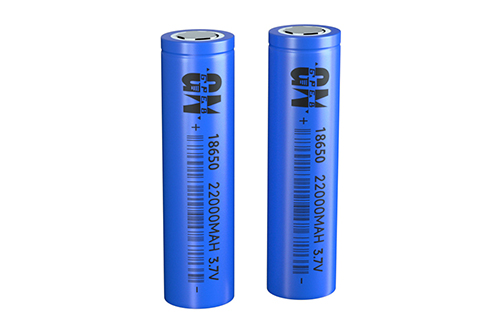
Why 18650 lithium batteries can become an important component of modern mobile power sources.26650 b
Lithium battery charging process.no. 7 alkaline battery
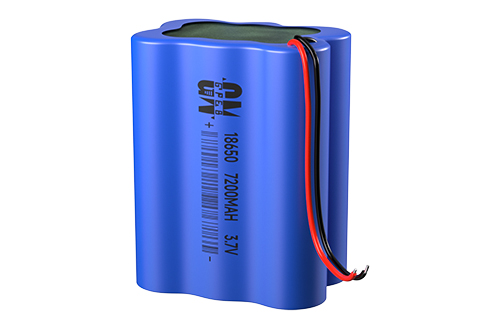
li ion 18650 battery pack manufacturer
Dry Battery



























 360° FACTORY VR TOUR
 Whatsapp
 Tel
Tel Email
Email TOP
TOP