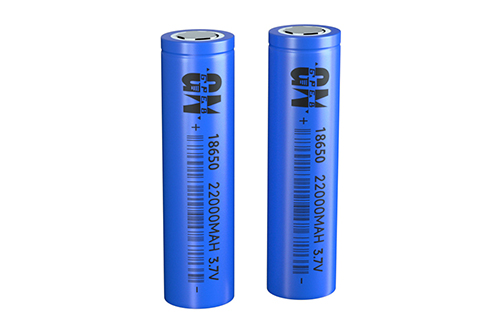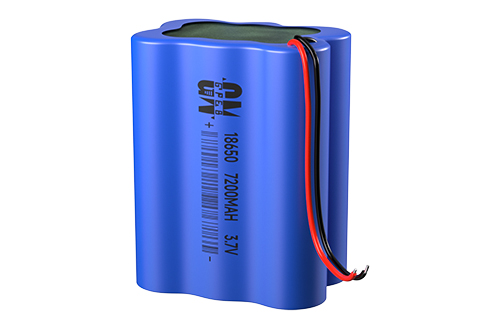
18650 rechargeable battery lithium 3.7v 3500mah
CH
About Us
Company Profile Development History Sales Network Partner Social Responsibility
Products
Rechargeable Battery Battery Packs Energy Storage Battery Primary Battery Handicraft Article
Subsidiary Company
SINO TECHNOLOGY SUNBEAM GREEN POWER DATAPOWER SEONG-HEE STD
Honor
Qualification Certificate Patent Certificate Honor Certificate
R&D
R&D Center Test Center
News
Company News Industry News Product Certificate
Contact Us
Other information
product
polymer lithium battery Primary battery Rechargeable Battery LR03 alkaline battery
18650 rechargeable battery lithium 3.7v 3500mah

Other information

Home  >  Other information

Capacity Retention Rate of Polymer Batteries

release time:2025-06-07 Hits:     Popular:AG11 battery

  Capacity Retention Rate of Polymer Batteries

  The capacity retention rate of polymer batteries is a key indicator of their long - term performance and reliability. It refers to the percentage of the battery's initial capacity that remains after a certain number of charge - discharge cycles or a specific period of use. A high capacity retention rate ensures that the battery can maintain its energy - storage capabilities over time, which is crucial for applications where long - term and stable power supply is required.

  Several factors affect the capacity retention rate of polymer batteries. One of the main factors is the chemical reactions occurring within the battery during cycling. Side reactions, such as the formation of solid - electrolyte interphase (SEI) layers on the electrode surfaces, can consume active lithium ions and electrode materials, gradually reducing the battery's capacity. The quality and stability of the SEI layer are critical. A stable and thin SEI layer can protect the electrodes from further degradation, while an unstable or thick SEI layer can increase internal resistance and accelerate capacity loss.

  Temperature also has a significant impact on capacity retention. High temperatures can accelerate chemical reactions within the battery, leading to faster degradation of the electrode materials and the electrolyte. On the other hand, extremely low temperatures can reduce the ionic conductivity of the electrolyte, affecting the battery's performance and capacity. Therefore, operating polymer batteries within an appropriate temperature range, usually between 20°C - 40°C for optimal performance, helps maintain a higher capacity retention rate.

  The charging and discharging rate, or the C - rate, is another important factor. High - rate charging and discharging can cause stress on the battery, leading to increased internal resistance and accelerated capacity fading. Using a moderate C - rate during charging and discharging cycles can help preserve the battery's capacity over time. Additionally, avoiding overcharging and over - discharging, which can cause irreversible damage to the battery, is essential for maintaining a good capacity retention rate.

  To improve the capacity retention rate, battery manufacturers are constantly researching and developing new materials and technologies. For example, using more stable electrode materials, optimizing the electrolyte composition to suppress side reactions, and developing advanced battery management systems to monitor and control the charging and discharging processes more precisely. By addressing these factors and implementing appropriate strategies, it is possible to enhance the capacity retention rate of polymer batteries, extending their service life and improving their overall performance.


Read recommendations:

Cabinet type energy storage battery 20KWH

Lithium manganate battery parameters.12V27A battery

The difference between lithium polymer batteries and lithium batteries.solar energy battery storage

18650 lithium battery 2600mah

li ion 18650 battery pack wholesale

Last article:Polymer Battery Smart Manufacturing Applications

Next article:Recycling and Processing Technologies of Polymer Batteries

Popular recommendation

522749 lipo battery company

2023-03-22

18650 lithium ion battery 3.7v

2023-03-22

801752 battery wholesaler

2023-03-22

household energy storage lithium battery maker

2023-05-10

18650 lithium battery 3000mah

2023-03-22

Lithium-ion battery GN-300

2022-09-27

703048 1100mAh 3.7V

2022-06-27

601525 170mAh 3.7V

2022-08-19

Business laptop bag

2022-09-22

18650 1200mAh 3.7V

2022-08-19

Coin Cell BR 1632

2022-10-15

Coin Battery CR 1625

2022-09-27

R03P

2023-03-27

701224 145MAH 3.7V

2023-06-10

Coin Battery CR 1616

2022-09-27

lifepo4 18650 battery

2023-06-25

3.7 volt 18650 lithium battery

2023-06-25

NiMH battery pack

2023-08-04

3.7v 2200mah 18650 lithium battery

2023-06-25

18650 lithium battery cells

2023-06-25

How to ensure the consistency of the 18650 battery pack?button cell battery cr1620

2023-09-18

Fast - charging Technology of Lithium - ion Batteries

2025-03-04

CR2330 battery.What reliable lithium-ion battery technologies are there?

2023-12-01

Influence of different temperature on performance of lithium battery pack

2024-03-18

Production Process of Pouch - type Lithium - ion Batteries

2025-03-21

Battery discharge by yourself.3.7V 18650 lifepo4 battery

2023-07-13

What are the advantages of lithium iron phosphate batteries

2023-02-23

How to understand the main safety issues of lithium polymer batteries?12v 100ah lithium ion battery

2023-09-09

Electronic Protection of Lithium Batteries.polymer lithium battery

2023-08-04

What is the difference between 18650 batteries and soft pack lithium batteries?CR1625 battery

2023-06-20
360° FACTORY VR TOUR
lithium ion battery 18650 priceWhatsapp
lithium ion battery 18650 price

lithium ion battery 18650 priceTel
+86 19925278095

lithium ion battery 18650 priceEmail
admin@sino-techgroup.com

TOP