What are the types and technologies of power batteries for new energy
vehicles?
Pure electric vehicles first used lead-acid batteries. Lead and its oxides
were used as electrode materials and sulfuric acid solution was used as the
electrolyte. This is the power source of most battery vehicles today. Low cost
is its biggest advantage. However, because the energy density of lead-acid
batteries is low, it brings about problems such as large size and small
capacity. It cannot meet the weight control of a car, the consumption of driving
force, and even the service life of more than 10,000 kilometers per year.
Therefore, It could not be used on mass-produced vehicles on a large scale and
was eventually eliminated by automobile manufacturers.
Sealed lead-acid battery pack
NiMH batteries
Nickel-metal hydride batteries are a new type of green battery developed in
the 1990s. They have the characteristics of high energy, long life, and no
pollution. Nickel-metal hydride batteries are very close to our daily lives.
From the early days of Suisse to the present Rechargeable toothbrushes and other
small appliances are very common. The anode is a nickel-hydrogen compound and
the cathode is a metal hydride. Its energy density and number of charge and
discharge times are greatly improved compared to lead-acid batteries. The
electrolyte is non-flammable and safety is guaranteed. , the manufacturing
process is mature, and BYD was the world's second largest nickel-metal hydride
battery manufacturer before building cars.
NiMH battery pack
However, because the charging efficiency of nickel-metal hydride batteries
is average, there is a charging memory effect, and the working voltage is low
(high-voltage fast charging cannot be used), it is not suitable for the single
power source of the car and is suitable for auxiliary engine work. Toyota is the
best in this regard. Its hybrid system uses an Atkinson engine + a nickel-metal
hydride battery pack. The Atkinson engine itself has the advantage of being
efficient in the middle speed range, but it also has the problem of weakness at
low and high speeds. , and the nickel-metal hydride battery can be a great help
to solve the lack of power at starting and high speed.
Since lithium batteries have been widely used, nickel-metal hydride
batteries have also been completely replaced in cars. For example, Toyota's new
generation hybrid system uses a more efficient engine + lithium battery
combination. Compared with lithium batteries, nickel-metal hydride batteries
have no advantages in terms of capacity, cycle charging life and environmental
protection. The cost advantage has also been weakened by the vigorous
development of lithium batteries. This is the reason why nickel-metal hydride
batteries are gradually withdrawing from the automotive field. location.
lithium battery
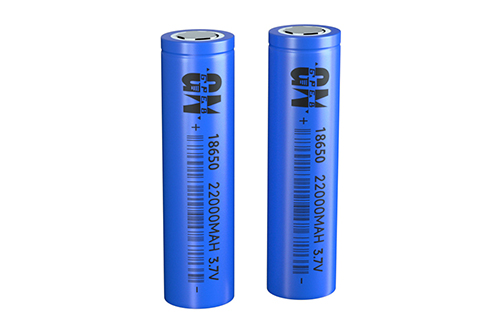
Lithium batteries are the mainstream choice for new energy vehicles at this
stage. Lithium compounds (lithium manganate, lithium iron phosphate, etc.) are
used as electrode materials, and graphite is used as anode materials. Its
advantages include high energy density, small size, light weight, and charging
efficiency. high. The main factor that determines the type or performance of
lithium batteries lies in the materials of the battery poles. The material of
the positive electrode is the key at this stage, such as the mainstream lithium
iron phosphate, lithium cobalt oxide, nickel cobalt manganese, etc. in the
ternary materials. In terms of capacity There are differences in multiple
dimensions such as cost, low-temperature charging and discharging, and
safety.
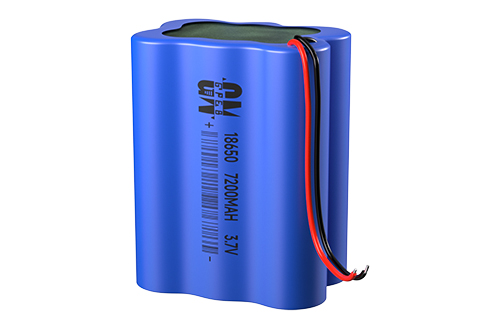
Lithium battery pack
However, regardless of type, all lithium battery packs will face the
"natural enemy" of low temperature. Although there are certain differences in
the optimal operating temperatures of different lithium battery types, the
decrease in lithium ion activity that occurs when the temperature is lower than
the optimal range has a greater impact on the cruising range. This has also been
reflected in our previous tests: The actual range of electric vehicles equipped
with lithium battery packs in northern winter can generally only reach more than
60% of the theoretical range, or about 70% at most.
hydrogen fuel cell
Everyone knows that water is the final product of H2+O2 combustion, so
hydrogen is an ideal clean energy source. It is characterized by no pollution,
no noise, and high efficiency. As for the hydrogen itself, combustion can
release a large amount of energy and has excellent low-temperature performance.
The most important thing is that the hydrogenation efficiency is high. It only
takes 5 minutes to drive more than 600 kilometers with hydrogenation. , with a
speed of 140~150 kilometers per hour. And there is still room for improvement in
this data. All of the above are far superior to existing lithium batteries.
However, a hydrogen fuel cell car is more than 200 kilograms heavier than a
similar type of internal combustion vehicle and is more than five times more
expensive.
It is not yet popular in China, and the reason is that it is expensive.
graphene battery
Regarding the discussion of power batteries for future new energy vehicles,
the most reliable and most discussed one is the graphene battery. To "translate"
some professional interpretations is: there are two ways to use this material
combined with lithium batteries. One is The graphene composite material is used
as the conductive agent of the lithium battery, and the second is directly used
as the negative electrode. The effect is to increase the activity of the lithium
battery, thereby improving the cruising range and charging speed of the electric
vehicle.
Graphene-carbonized sponge lithium-oxygen battery
Graphene batteries can effectively solve the shortcomings of lithium
batteries, and the product characteristics are directly linked to the use of new
energy vehicle users. The benefits of this material are indeed great, and South
Korea's Samsung has also announced that it has mastered this technology, but the
cost is a major bottleneck. It is not easy to obtain graphene. In the early
days, it was a material used in the aerospace field. When and How to reduce
costs will be a major problem for this high-quality product to "fly into the
homes of ordinary people". Various automobile manufacturers have not yet
announced plans to make efforts in this regard.
To put it simply, the working principle of pure electric vehicles is to
"charge directly with electricity", while hydrogen fuel cell vehicles "burn"
(chemical reaction) H2+O2 into electricity and water, which is equivalent to
"burning hydrogen" to generate electricity. Both "batteries" are also
zero-emission. The lithium battery of electric vehicles has smaller capacity
density, poor low-temperature activity, which affects battery life, and slow
charging speed. Hydrogen fuel cells do not have the problem at all, and their
working efficiency is much higher. This is exactly The reason hydrogen is called
a premium energy source.
Read recommendations:
14500 850mAh 3.7V
Calculation method for new energy batteries
What is the principle of lithium battery capacity?
602248 battery Manufacturing
NiMH No. 7























 360° FACTORY VR TOUR
 Whatsapp
 Tel
Tel Email
Email TOP
TOP