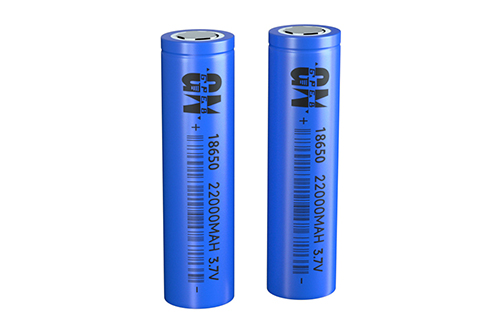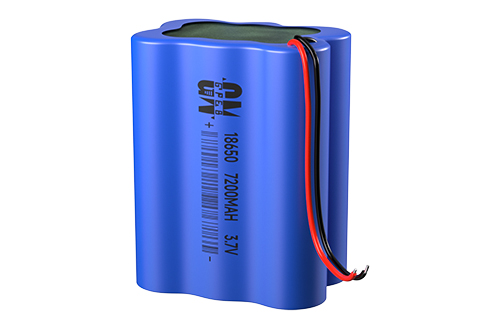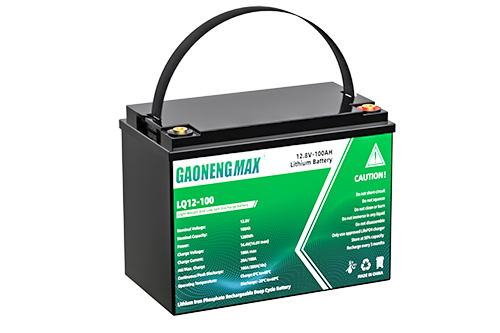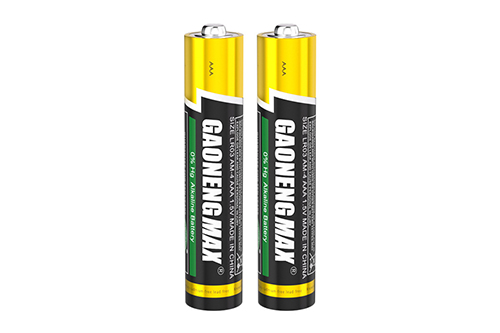
Lithium Battery 3.7V Lithium Polymer Battery 3.2V LifePo4 Battery 1.2V Ni-MH Battery Button Coin Battery

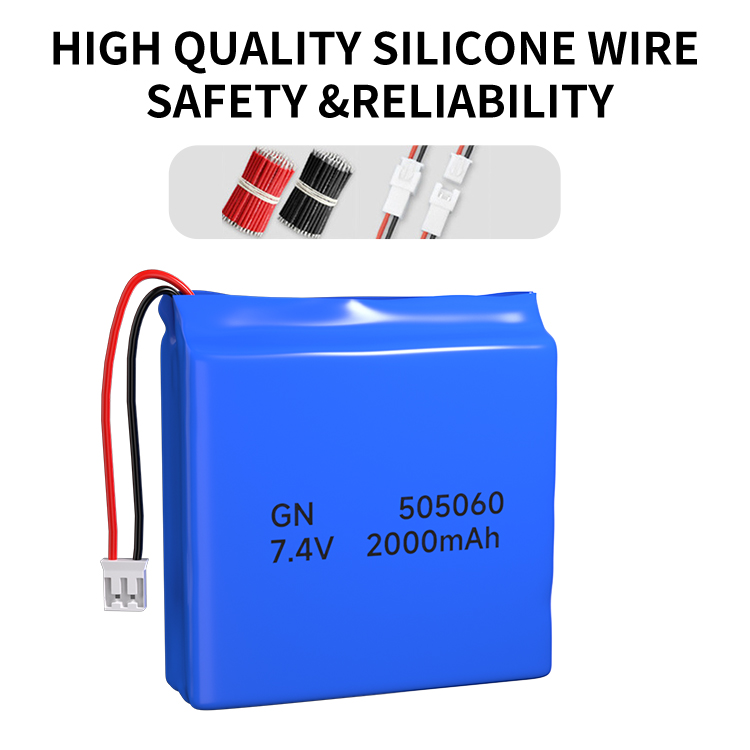
3.7V Battery Pack 7.4V Battery Pack 11.1V Battery Pack 14.8V Battery Pack Other Battery Pack
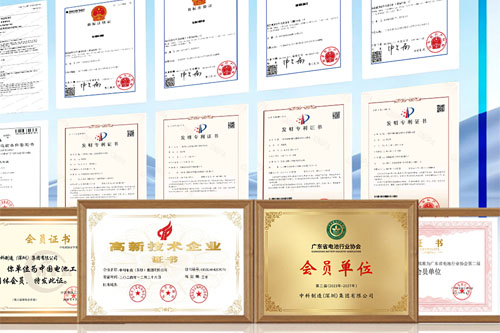
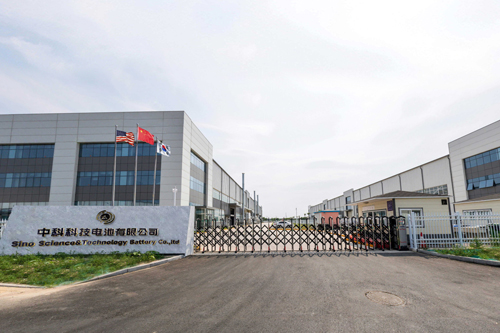
Sino Science&Technology Battery Co.,ltd is a high-tech production enterprise which specialize in the R&D and production of Lifepo4 batteries,energy storage battery,portable UPS power supply,personalized customization lithium battery pack etc .

Environmental cylindrical 18650 21700 32700 26650 14500 18500 lithium ion rechargeable battery, LifePO4 battery,3.7V lithium polymer battery, NiMH battery , NiCD battery ,Lead acid battery,dry cell battery ,alkaline battery ,heavy duty battery, button cell battery etc. we devote to R&D,innovation ,production & sales

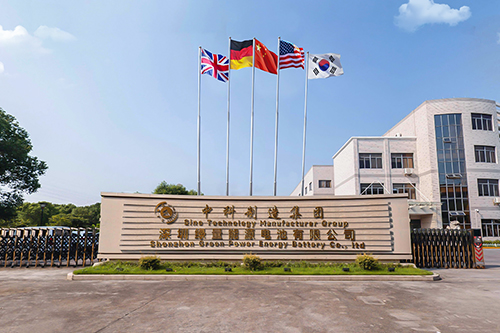
Shenzhen Green Power Energy Battery Co.,ltd specializes in a wide range of digital battery such as environmental cylindrical 18650 21700 32700 26650 14500 18500 lithium ion rechargeable battery, LifePO4 battery, 3.7V lithium polymer battery, NiMH battery, NiCD battery, dry cell battery, alkaline battery, heavy duty battery, button cell battery etc. we devote to R&D, innovation, production & sales. With automatic production machines we have been exported goods to all over the world over 15years. We have complete exported certificate such as KC, CE, UL, BSCI, ROHS, BIS, SGS, PSE etc
Dongguan Datapower New Energy Co.,ltd is a high-tech production enterprise which specialize in the R&D and production&sale of lithium polymer batteries,drone battery,airplane batteries &battery pack etc.

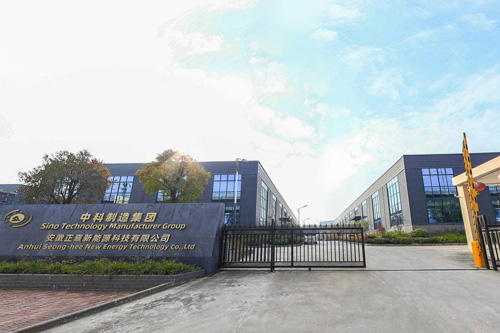
Anhui Seong-hee New Energy Technology Co.,ltd is a high-tech production enterprise which specialize in the R&D and production of primary batteries. And mainly produces and sells alkaline batteries & carbon zinc batteries. there are size AA, AAA, C, D, 9V etc
Guizhou STD Battery Co.,ltd is a high-tech production enterprise which specialize in the R&D and production & sale of lithium polymer batteries, drone battery, airplane batteries & battery pack etc.

release time:2024-01-31 Hits: Popular:AG11 battery

LiFePO4, together with ternary materials, has become the main positive electrode material for power batteries due to its excellent volume stability and safety. When studying the charge and discharge behavior of LiFePO4 at low temperatures, Gu Yijie et al. found that its Coulombic efficiency decreased from 100% at 55 ℃ to 96% at 0 ℃ and 64% at -20 ℃, respectively; The discharge voltage decreases from 3.11 V at 55 ℃ to 2.62 V at -20 ℃. Xing et al. modified LiFePO4 using nanocarbon and found that the addition of nanocarbon conductive agents reduced the sensitivity of LiFePO4's electrochemical performance to temperature and improved its low-temperature performance; The discharge voltage of modified LiFePO4 decreased from 3.40 V at 25 ℃ to 3.09 V at -25 ℃, with a decrease of only 9.12%; And its battery efficiency is 57.3% at -25 ℃, higher than 53.4% without nanocarbon conductive agents. Bae et al. analyzed the low-temperature performance of LiFePO4 using numerical simulation methods and pointed out that when the Li+diffusion coefficient is below 0.05 μ When m2/s, it will cause a serious decrease in specific capacity.
In recent years, phosphate based cathode materials have made great progress, and in addition to traditional LiFePO4, similar structured Li3V2 (PO4) 3 has also attracted attention. When studying Li3V2 (PO4) 3/C full batteries, Qiao et al. found that under 0.1C charging and discharging conditions, its discharge capacity was 130 mA · h/g at room temperature, but only 80 mA · h/g at -20 ℃; And its rate performance deteriorates more severely at low temperatures. At -20 ℃, the discharge capacity at 5C is only about 7.69% of that at room temperature, while it can hardly discharge at 10C. Rui et al. compared the low-temperature performance of LiFePO4 and Li3V2 (PO4) 3 and found that at -20 ℃, the capacity retention rate of Li3V2 (PO4) 3 was 86.7%, much higher than that of LiFePO4 (31.5%) under the same conditions. This is because the conductivity of LiFePO4 is one order of magnitude smaller than that of Li3V2 (PO4) 3, resulting in a much greater impedance and polarization effect than Li3V2 (PO4) 3; The activation energy of LiFePO4 system is 47.78 kJ/mol, which is much higher than the 6.57 kJ/mol of Li3V2 (PO4) 3, making it more difficult to remove lithium.
Recently, LiMnPO4 has aroused strong interest among people. Research has found that LiMnPO4 has advantages such as high potential (4.1 V), no pollution, low price, and large specific capacity (170 mAh/g). However, due to the lower ionic conductivity of LiMnPO4 compared to LiFePO4, Fe is often used to partially replace Mn to form LiMn0.8Fe0.2PO4 solid solutions in practice. The LiMn0.8Fe0.2PO4 solid solution obtained by Yang et al. using co precipitation method has a discharge capacity of 142 mAh/g at 0.1C, 25 ℃, and 72.5 mAh/g at -15 ℃. Martha et al. modified LiMn0.8Fe0.2PO4 (25-60 nm) using carbon coating and achieved good results: the discharge specific capacity can reach 160 mA · h/g at 30 ℃ and 0.2C, and 95 mA · h/g at 10C.
With the continuous improvement of application standards, the requirements for lithium-ion batteries have become increasingly strict. Expanding their operating temperature range and improving their low-temperature performance are imperative. From the above research, it can be seen that there is more research on the low-temperature characteristics of LiFePO4 system, while there is relatively less research on the low-temperature characteristics of ternary, Li3V2 (PO4) 3, and high-voltage nickel manganese spinel system cathode materials. Among them, although LiCoO2 was commercialized earlier, its low-temperature performance research is relatively limited due to its gradual withdrawal from the market. Compared to LiFePO4, the low ionic conductivity of LiFePO4 is more sensitive to its constraints at low temperatures, and the modification effect of nanomaterialization and the addition of conductive agents on its low-temperature performance is significant. Compared to the high ionic conductivity of Li3V2 (PO4) 3, V doping may be more beneficial for improving the low-temperature performance of LiFePO4 cathode materials. Compared with high-voltage nickel manganese spinel system and nickel cobalt aluminum ternary system cathode materials, research on their low-temperature performance is relatively limited due to significant high-temperature issues.
Read recommendations:
Low -temperature work battery introduction.lithium battery for solar energy storage system Processin
Lithium battery terminology, parameters, design and selection details
Last article:Lithium battery waterproof grade, IP67 dustproof and waterproof lithium battery pack
Next article:How to distinguish between energy storage lithium batteries and power lithium batteries? Professiona
Popular recommendation
18650 lithium ion battery 3.7v
2023-03-22402427 lipo battery company
2023-03-22602030 battery wholesaler
2023-03-22Ni-MH battery pack manufacture
2023-03-2218650 battery lithium ion 2200mah
2023-03-22Coin Battery CR 2477
2022-09-273.2V 304Ah
2022-10-12Adhesive hook and loop straps
2022-09-22Coin Battery CR 2354
2022-09-27Lithium-ion battery GN200 60000mAh
2022-08-19Coin Battery CR 1216
2022-09-27Coin Battery LR 721
2022-10-1518650 2500mAh 11.1V
2022-09-309V card-mounted carbon battery 6F22
2023-06-28Home energy storage battery GN-BOX3
2022-09-27button battery cr2032
2023-06-25CR2032 button cell batteries
2023-06-253.7v 18650 lithium battery
2023-06-25LR621 battery
2023-06-25Ni-MH battery packs
2023-06-25What are the effects of temperature changes on the charging and discharging of lithium batteries
2024-01-31button cell battery cr2025
2024-12-04Vehicle Power Lithium-ion Batteries
2025-06-26Main characteristics of lithium batteries
2024-07-19Air battery
2023-02-06Lithium iron phosphate battery pack
2022-11-07Battery maintenance.703048 polymer battery
2023-10-07The characteristics of lithium iron phosphate battery.803040 battery
2023-05-26Industrial instrument Lithium battery manufacturer customization
2023-02-18Lithium battery composition
2022-11-28
360° FACTORY VR TOUR