Lithium Battery 3.7V Lithium Polymer Battery 3.2V LifePo4 Battery 1.2V Ni-MH Battery Button Coin Battery

3.7V Battery Pack 7.4V Battery Pack 11.1V Battery Pack 14.8V Battery Pack Other Battery Pack
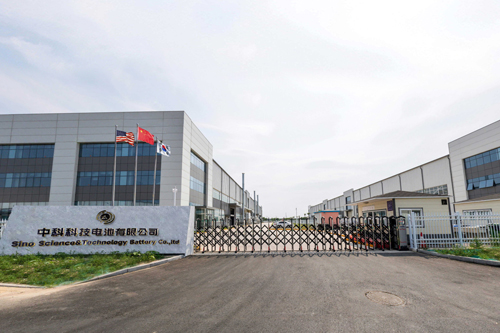
Sino Science&Technology Battery Co.,ltd is a high-tech production enterprise which specialize in the R&D and production of Lifepo4 batteries,energy storage battery,portable UPS power supply,personalized customization lithium battery pack etc .

Environmental cylindrical 18650 21700 32700 26650 14500 18500 lithium ion rechargeable battery, LifePO4 battery,3.7V lithium polymer battery, NiMH battery , NiCD battery ,Lead acid battery,dry cell battery ,alkaline battery ,heavy duty battery, button cell battery etc. we devote to R&D,innovation ,production & sales

Shenzhen Green Power Energy Battery Co.,ltd specializes in a wide range of digital battery such as environmental cylindrical 18650 21700 32700 26650 14500 18500 lithium ion rechargeable battery, LifePO4 battery, 3.7V lithium polymer battery, NiMH battery, NiCD battery, dry cell battery, alkaline battery, heavy duty battery, button cell battery etc. we devote to R&D, innovation, production & sales. With automatic production machines we have been exported goods to all over the world over 15years. We have complete exported certificate such as KC, CE, UL, BSCI, ROHS, BIS, SGS, PSE etc

Dongguan Datapower New Energy Co.,ltd is a high-tech production enterprise which specialize in the R&D and production&sale of lithium polymer batteries,drone battery,airplane batteries &battery pack etc.

Anhui Seong-hee New Energy Technology Co.,ltd is a high-tech production enterprise which specialize in the R&D and production of primary batteries. And mainly produces and sells alkaline batteries & carbon zinc batteries. there are size AA, AAA, C, D, 9V etc

Guizhou STD Battery Co.,ltd is a high-tech production enterprise which specialize in the R&D and production & sale of lithium polymer batteries, drone battery, airplane batteries & battery pack etc.

source:Industry News release time:2025-03-18 Hits: Popular:AG11 battery

The manufacturing process of shaped batteries is a complex and highly specialized procedure, tailored to create batteries with non - standard geometric forms to meet specific application requirements.
Design and Prototyping Phase
The process begins with an in - depth design phase. Engineers use advanced computer - aided design (CAD) software to create a detailed 3D model of the desired shaped battery. This model takes into account factors such as the intended application, the available space for the battery, and the required electrochemical performance. For example, in a wearable medical device, the battery needs to be small, lightweight, and conform to the shape of the device for comfort and ease of use. Once the design is finalized, a prototype is created. Prototyping often involves rapid - prototyping techniques such as 3D printing. The 3D - printed prototype allows for a physical representation of the battery design, enabling engineers to test the form - factor, fit, and initial functionality. This step helps in identifying any potential design flaws or areas for improvement before moving on to the actual manufacturing process.
Electrode Preparation
The preparation of electrodes is a crucial step in shaped - battery manufacturing. The electrodes, which consist of a positive electrode (cathode) and a negative electrode (anode), are made using specific materials depending on the type of battery, such as lithium - ion batteries. For the cathode, materials like lithium cobalt oxide, lithium iron phosphate, or lithium nickel - manganese - cobalt oxide are commonly used. These materials are mixed with binders and conductive additives to form a slurry. The slurry is then coated onto a metal foil, typically aluminum for the cathode. The coating process is carefully controlled to ensure a uniform thickness. The anode, often made of graphite, is also prepared in a similar manner. The graphite powder is mixed with binders and coated onto a copper foil. The thickness and composition of the electrode coatings are critical as they directly affect the battery's performance, including its capacity, charge - discharge rate, and lifespan.
Cell Assembly
After electrode preparation, the cell assembly stage commences. In shaped - battery manufacturing, the assembly process needs to be adapted to the non - standard shape. The electrodes are carefully stacked or wound in a way that conforms to the designed shape. For example, in a curved - shaped battery, the electrodes may be rolled or bent to fit the curve. A separator, which is a porous material that prevents direct contact between the anode and cathode while allowing the flow of ions, is placed between the electrodes. The assembly is then placed in a suitable casing. The casing material is selected based on the battery's requirements, such as resistance to corrosion, mechanical strength, and thermal stability. In some cases, the casing may be custom - molded to fit the unique shape of the battery. Once the cell is assembled, an electrolyte is added. The electrolyte, which can be a liquid or a solid - state material, enables the flow of ions between the anode and cathode during the charge - discharge process.
Testing and Quality Control
The final stage of the shaped - battery manufacturing process is extensive testing and quality control. The batteries are tested for various parameters, including their capacity, voltage, internal resistance, and cycle life. Capacity testing involves charging the battery to its full capacity and then discharging it under controlled conditions to measure the amount of electrical charge it can deliver. Voltage testing ensures that the battery's output voltage is within the expected range. Internal resistance testing helps to assess the efficiency of the battery. Cycle - life testing involves subjecting the battery to multiple charge - discharge cycles to determine how many times it can be recharged before its performance degrades significantly. Any batteries that do not meet the strict quality standards are rejected, and improvements are made to the manufacturing process to enhance the overall quality of the shaped batteries.
Read recommendations:
18650 lithium 3.7 battery.18650 compared with polymer lithium battery
Last article:Environmental Friendliness of Cylindrical Lithium - Ion Batteries
Next:Market Prospects of Soft - pack Lithium Batteries
Popular recommendation
701224 battery manufacture
2023-03-2218650 battery 1800 mah
2023-03-22home energy storage lithium battery manufacture
2023-05-10801752 polymer battery company
2023-03-2232700 battery
2023-03-22Home energy storage battery GN-BOX3
2022-09-27R03P
2022-07-01Lithium Battery LQ12-06
2022-08-19Home energy storage battery GN-BOX4
2022-09-27LR03
2022-11-16702535 600mAh 3.7V
2022-08-19Lithium Battery GN7250
2022-08-19R20
2022-08-19Ni-MH AAA800mAh 1.2V
2022-07-01801738 450MAH 3.7V
2023-06-10LR44 battery
2023-06-25702535 polymer battery
2023-06-251.5V rechargeable battery
2023-06-25CR1130 battery
2023-06-25602030 battery
2023-06-25High-Rate Discharge Technology for Lithium Batteries
2025-08-05Select battery cells
2024-07-11Preparation and requirements of Lithium carbonate battery raw materials.18650 battery 3.7v 2200mah
2023-08-03Waterproof Rating of Waterproof Lithium Batteries
2024-10-14Low - Temperature Performance of Lithium - Ion Batteries
2025-04-03What is lithium iron phosphate battery?home solar energy storage lithium battery Processing
2023-05-08Can lithium batteries reach a battery life of 600km?LR41 battery
2023-06-14Classification of lithium battery separators.18650 lithium battery cells
2023-07-20Basic concepts related to lithium battery charging and discharging.18650 lithium battery 3.7 v
2023-08-12Future Development of Lithium Battery Diaphragm Materials
2022-11-10
360° FACTORY VR TOUR