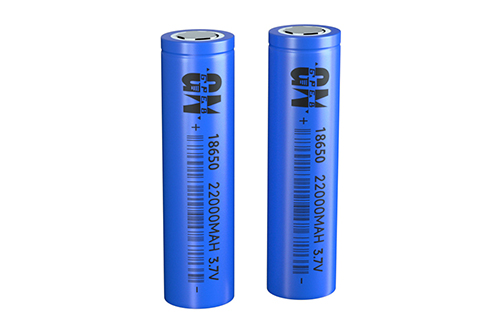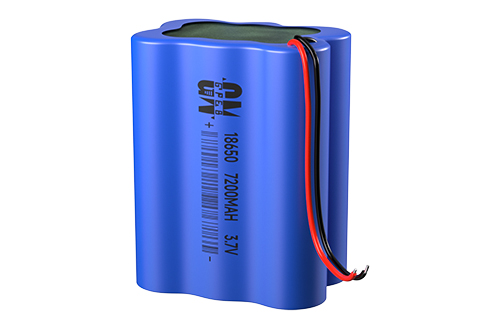
18650 rechargeable battery lithium 3.7v 3500mah
CH
About Us
Company Profile Development History Sales Network Partner Social Responsibility
Products
Rechargeable Battery Battery Packs Energy Storage Battery Primary Battery Handicraft Article
Subsidiary Company
SINO TECHNOLOGY SUNBEAM GREEN POWER DATAPOWER SEONG-HEE STD
Honor
Qualification Certificate Patent Certificate Honor Certificate
R&D
R&D Center Test Center
News
Company News Industry News
Contact Us
Other information
product
polymer lithium battery Primary battery Rechargeable Battery LR03 alkaline battery
18650 rechargeable battery lithium 3.7v 3500mah
polymer lithium battery

Primary battery

Rechargeable Battery

LR03 alkaline battery

Lithium - Ion Battery Charge - Discharge Cycle Life Testing

release time:2025-08-28 Hits:     Popular:AG11 battery


Lithium - ion battery charge - discharge cycle life testing is crucial for evaluating the long - term durability and performance degradation of batteries.

1. Test Setup

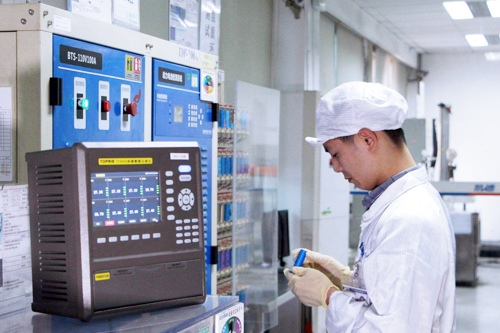
Test Equipment: A battery cycler is the main equipment used for cycle life testing. It can precisely control the charging and discharging currents, voltages, and cut - off conditions. The cycler should have high accuracy in current and voltage control, typically with current accuracy of ±0.1% and voltage accuracy of ±0.05%.

Test Environment: The testing is usually carried out in a temperature - controlled chamber to simulate different operating temperatures. Common test temperatures include room temperature (25°C), elevated temperatures (45 - 60°C) to accelerate degradation, and low temperatures (- 20 - 0°C) to study the impact of cold on cycle life. The relative humidity in the test environment is also controlled, generally maintained at 40 - 60% to avoid issues related to moisture absorption by the battery.

2. Test Procedure

Charge - Discharge Protocol: A standard charge - discharge protocol is defined. For example, in a typical protocol for a lithium - ion battery used in electric vehicles, the charging may be carried out at a constant current (e.g., C/2) until the upper - cut - off voltage (e.g., 4.2 V for a lithium - cobalt - oxide - based battery) is reached, followed by a constant - voltage charging stage until the charging current drops to a specified value (e.g., C/10). The discharging is then performed at a constant current (e.g., C/1) until the lower - cut - off voltage (e.g., 2.75 V) is reached. This charge - discharge cycle is repeated for a large number of times, often up to several thousand cycles.

Monitoring Parameters: During the cycle life testing, various parameters are continuously monitored. These include the charging and discharging capacity, voltage profiles, internal resistance, and temperature of the battery. The capacity fade is calculated as the percentage decrease in the discharge capacity compared to the initial discharge capacity after each cycle. The internal resistance is measured periodically, usually using methods like EIS, and an increase in internal resistance is an indication of battery degradation.

3. Data Analysis and Evaluation

Capacity Fade Curve: The capacity fade data is plotted as a function of the number of cycles to obtain the capacity fade curve. From this curve, important parameters such as the cycle life (usually defined as the number of cycles when the capacity fades to 80% of the initial capacity) can be determined. Different battery chemistries and designs will have different capacity fade curves. For example, lithium - iron - phosphate - based batteries generally show better cycle life performance compared to lithium - cobalt - oxide - based batteries.

Failure Analysis: When the battery reaches the end - of - life criteria (e.g., capacity fade to 80% or excessive increase in internal resistance), failure analysis is carried out. This may involve disassembling the battery to examine the physical and chemical changes in the electrodes, electrolyte, and separator. Techniques such as scanning electron microscopy (SEM), X - ray diffraction (XRD), and Fourier - transform infrared spectroscopy (FTIR) are used to analyze the microstructure, crystal structure, and chemical composition of the battery components to understand the root causes of degradation.


Read recommendations:

3.2V 230Ah

Lithium battery metal element-lithium.LR521 battery

Square - shaped Lithium Batteries in Mobile Power Banks

NiMH battery pack direct sales

Ni-MH batteries

Last article:The Damage of Overcharging and Over - Discharging to Batteries

Next article:Rapid Detection Technology of Lithium - Ion Battery Capacity

Popular recommendation

energy storage battery for solar system direct sales

2023-05-10

601525 battery Vendor

2023-03-22

601525 battery wholesaler

2023-03-22

18650 rechargeable battery lithium 3.7v 3500mah

2023-03-22

convenient energy storage power supply wholesaler

2023-05-10

Ni-MH AA700mAh 1.2V

2022-07-01

Coin Battery CR 1632

2022-09-27

LR20

2022-07-01

Ni-MH AAA1000mAh 1.2V

2022-07-01

603450 1200MAH 3.7V

2023-06-10

801538 480mAh 3.7V

2022-08-19

Ni-MH AAA800mAh 1.2V

2022-07-01

R20

2022-07-01

6F22

2023-03-27

18650 1800mAh 3.7V

2022-08-19

6LR61 battery

2023-06-25

18650 3.7v battery

2023-06-25

AG1 battery

2023-06-25

lithium lon battery energy storage system

2023-06-25

lithium 3400mah 3.7v 18650 battery

2023-06-25

What is the Balancing Working Principle of Lithium-Ion Battery Protection Boards?

2025-07-30

Lithium - Ion Batteries for Aerospace

2025-06-04

Analysis of technical difficulties in concentrated photovoltaic power generation system

2024-01-24

R03 Carbon battery.Lithium ion batteries

2023-10-23

Super battery prospect.18650 lithium ion battery cell

2023-07-14

What are the main differences between ternary lithium batteries and lithium iron phosphate batteries

2023-03-17

Tell me about how to distinguish and test methods for polymer batteries.18650 lithium battery 3000ma

2023-09-08

1.5v dry cell battery.Will quaternary lithium-ion battery technology be the future development direc

2023-10-14

Explaining the production process of lithium ion battery.energy storage battery 48v lithium ion batt

2023-03-16

Lithium iron phosphate batteries are subject to temperature.18650 battery 4800mah

2023-08-22
360° FACTORY VR TOUR
lithium ion battery 18650 priceWhatsapp
lithium ion battery 18650 price

lithium ion battery 18650 priceTel
+86 19925278095

lithium ion battery 18650 priceEmail
admin@sino-techgroup.com

TOP