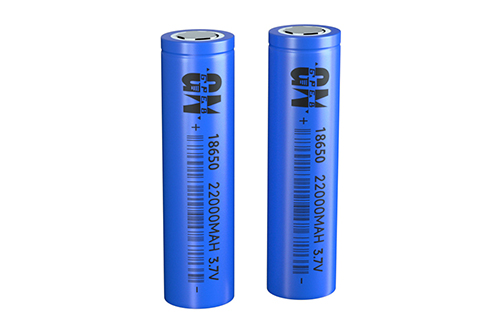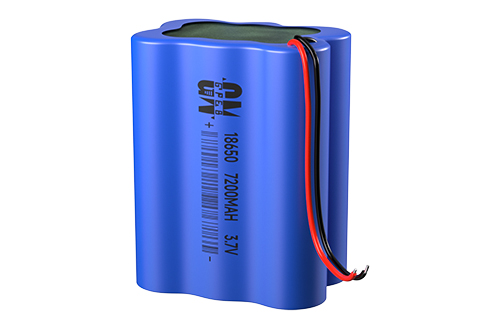
18650 rechargeable battery lithium 3.7v 3500mah
CH
About Us
Company Profile Development History Sales Network Partner Social Responsibility
Products
Rechargeable Battery Battery Packs Energy Storage Battery Primary Battery Handicraft Article
Subsidiary Company
SINO TECHNOLOGY SUNBEAM GREEN POWER DATAPOWER SEONG-HEE STD
Honor
Qualification Certificate Patent Certificate Honor Certificate
R&D
R&D Center Test Center
News
Company News Industry News
Contact Us
Other information
product
polymer lithium battery Primary battery Rechargeable Battery LR03 alkaline battery
18650 rechargeable battery lithium 3.7v 3500mah

News

Home  >  News  >  Industry News

Company News

Industry News

Performance Testing of Lithium - Ion Battery Cell Materials

source:Industry News release time:2025-09-22 Hits:     Popular:AG11 battery

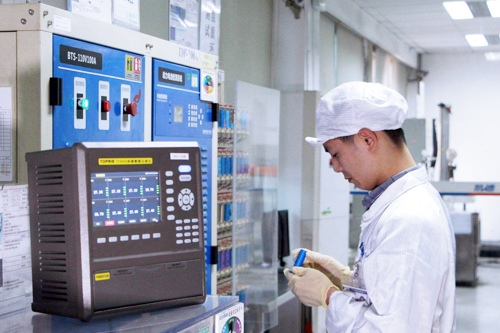
The performance testing of lithium - ion battery cell materials is a fundamental and meticulous process that plays a pivotal role in the development, optimization, and quality control of lithium - ion batteries. These tests are designed to comprehensively evaluate the properties of various materials used in battery cells, including cathode materials, anode materials, electrolytes, and separators, ensuring that they meet the stringent requirements for high - performance, reliable, and safe battery operation.

For cathode materials, which are crucial for determining the battery's energy density and voltage, a series of tests are conducted. One of the primary tests is the charge - discharge cycling test. In this test, the cathode material is fabricated into a half - cell or a full - cell configuration, and then cycled between specific voltage limits at a controlled current rate. The capacity retention, coulombic efficiency, and voltage profiles during charging and discharging are carefully monitored over multiple cycles. A high - performing cathode material should exhibit minimal capacity fade over a large number of cycles, indicating good long - term stability. Additionally, techniques such as X - ray diffraction (XRD) are used to analyze the crystal structure of the cathode material before and after cycling. Changes in the crystal structure can provide insights into the material's degradation mechanisms, helping researchers to improve its performance.

Anode materials also undergo extensive testing. The rate capability test is important for evaluating how well the anode can handle high - current charging and discharging. By subjecting the anode - based cell to different current rates, the capacity delivered at each rate can be measured. A high - quality anode material should be able to maintain a significant portion of its theoretical capacity even at high current rates. Moreover, the surface morphology of the anode material is examined using scanning electron microscopy (SEM). The SEM images can reveal details such as the particle size, shape, and surface roughness, which can affect the material's electrochemical performance, including its ability to form a stable solid - electrolyte interphase (SEI) layer.

Testing of electrolytes focuses on properties such as ionic conductivity, electrochemical stability window, and thermal stability. Ionic conductivity determines how efficiently lithium ions can move through the electrolyte, and it is typically measured using electrochemical impedance spectroscopy (EIS). The electrochemical stability window is evaluated by cyclic voltammetry, which shows the voltage range within which the electrolyte remains stable without undergoing unwanted chemical reactions. Thermal stability tests, such as differential scanning calorimetry (DSC) and thermogravimetric analysis (TGA), are carried out to assess the electrolyte's behavior at different temperatures, helping to prevent thermal runaway and other safety issues.

Separator performance is also critical, and tests mainly focus on its porosity, ionic permeability, and mechanical strength. Porosity and ionic permeability tests determine the separator's ability to allow lithium ions to pass through while blocking the direct contact between the cathode and anode. Mechanical strength tests, including tensile and puncture tests, ensure that the separator can withstand the mechanical stresses during battery operation and assembly without tearing or breaking. Overall, the performance testing of lithium - ion battery cell materials is a complex and multi - faceted process that provides essential data for the continuous improvement and innovation of lithium - ion battery technology.


Read recommendations:

Ni-MH AA1800mAh 1.2V

Lithium battery action mechanism.lifepo7 battery for solar energy storage Product

Testing standards for marine batteries

3.7 volt 18650 lithium battery

3.7v 18650 battery pack

Last article:Technologies for Improving Lithium - Battery Charging Efficiency

Next:Safety Protection Technologies for Lithium - Ion Battery Packs

Popular recommendation

701221 battery sales

2023-03-22

521133 polymer battery

2023-03-22

18500 battery Factory

2023-03-22

Nickel Hydride Batteries

2023-03-22

601848 polymer battery company

2023-03-22

Coin Cell BR 1225

2022-10-15

802540 800MAH 3.7V

2023-06-10

Li-ion 18650 3500mAh 3.7V

2022-06-20

Home energy storage battery FBC-HS03

2022-11-04

602030 300mAh 3.7V

2022-07-01

Rack-mounted energy storage battery GN-192V 100Ah

2022-09-27

R6P

2022-12-01

LR6

2022-08-19

701224 145MAH 3.7V

2023-06-10

Hanging neck fan

2022-09-22

lithium 3400mah 3.7v 18650 battery

2023-06-25

batteries 9v

2023-06-25

18650 3500mah battery

2023-06-25

lifepo4 18650 battery

2023-06-25

18650 battery cell

2023-06-25

What are the safety characteristics of lithium-ion batteries and nickel hydrogen batteries respectiv

2024-09-12

Specification and technical requirements for marine power lithium batteries

2024-07-23

Lithium manganate (LiMn2O4).lifepo9 battery for solar energy storage Factory

2023-04-18

Research on solar cell laser cutting technology experiment

2024-01-23

Testing standards for marine batteries

2024-08-15

Advantages and disadvantages of lithium iron phosphate/lithium cobalate/lithium manganate/ternary li

2022-11-18

What are the power batteries?lithium battery for solar energy storage system company

2023-05-06

Why is lithium iron phosphate battery more expensive than ternary lithium batteries.Column rechargea

2023-03-28

Current status of lithium iron batteries.LR621 battery

2023-05-25

The working status of lithium-ion battery chargers.3.7 volt 18650 lithium battery

2023-08-10
360° FACTORY VR TOUR
lithium ion battery 18650 priceWhatsapp
lithium ion battery 18650 price

lithium ion battery 18650 priceTel
+86 19925278095

lithium ion battery 18650 priceEmail
admin@sino-techgroup.com

TOP